
How to Wash Christian T-Shirts Without Fading the Print
Last Updated: October 26, 2026
Quick Summary
Wash Christian t-shirts inside out in cold water on a gentle cycle with a measured dose of mild liquid detergent, then air dry them flat or tumble dry low. Cold water and low heat protect the print from fading, cracking and peeling.
- Read the care label first, since it overrides any general washing guide.
- Turn the shirt inside out so friction hits the seams, not the design.
- Sort lights from darks and keep heavy items like jeans and towels separate.
- Skip chlorine bleach and go easy on fabric softener and dryer sheets.
- Remove the shirt from the washer promptly and dry it print side up.
Table of Contents
- Start With the Care Label on Your Christian T-Shirt
- How to Wash Printed T-Shirts Step by Step
- The Best Water Temperature for Washing T-Shirts
- How to Dry Printed T-Shirts Without Cracking the Design
- How to Remove Stains From Graphic Tees Safely
- Fabric and Print Types: Why Cotton Tees and Blends Need Different Care
- Keep Shrinkage and Shape Under Control
- Choose Faith-Based Clothing Built to Last
- Frequently Asked Questions
Start With the Care Label on Your Christian T-Shirt
Learning how to wash Christian t-shirts starts with one small step most people skip: reading the care label on your Christian t-shirts.
At Marble Suspended in Space, we care about keeping scripture-inspired designs readable for years, not weeks.
Here is what to look for:
- Fabric content: cotton, polyester, or a blend
- Wash method: machine wash or hand wash
- Water temperature: often shown as a tub symbol with a number
Most printed tees carry similar guidance, but always trust your own label over any general guide, including this one.
How to Wash Printed T-Shirts Step by Step
The safest method for washing printed t-shirts is short and simple: turn the shirt inside out, use cold water, choose a gentle cycle, and dry it flat or on low heat.
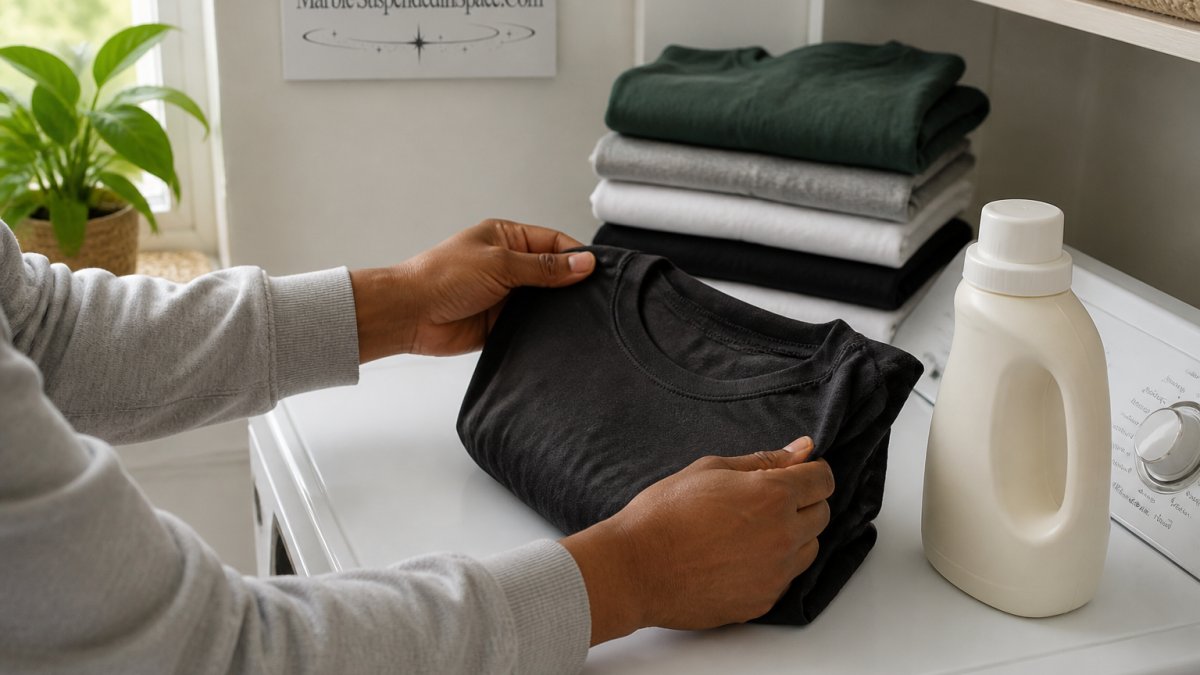
Step 1: Read the Care Label First
The label is the maker's own note about what the garment can handle, and it overrides any general guide, including this one. Look for fabric content, wash method, water temperature, drying method, and ironing instructions. If the tag is missing or unreadable, treat the shirt as delicate until you know better.
Step 2: Turn the Shirt Inside Out
Turning the shirt inside out is the single easiest way to protect the print. In the wash, fabrics rub against each other, and that friction is what dulls ink and cracks cured plastisol or heat-transfer designs. Flipping the shirt inward sends the abrasion to the inside seams instead of the design face. Fasten buttons or zippers on other garments, or wash the tee in a mesh laundry bag, so metal hardware cannot snag the print.
Step 3: Sort by Color and Fabric Weight
Sort lights from darks so dye from a dark shirt does not bleed onto a white one. Also separate heavy items like jeans and towels from lightweight knits. Heavy fabrics beat against a thin tee in the drum and accelerate pilling and print wear. A small, separate load of graphic tees is the gentlest option when you have enough shirts to fill it.
Step 4: Choose a Gentle Cycle and Cold Water
Pick the gentle or delicate cycle and set the water to cold. Cold water slows dye transfer and reduces the heat that breaks down ink and shrinks cotton. A shorter cycle also means less time tumbling, which is where most mechanical wear happens. If your machine offers a low-spin option, use it; high spin speeds wring the fabric and can distort a print that is still warm from the wash.
Step 5: Use a Mild Detergent at the Right Dose
Use a mild, liquid detergent and measure it rather than pouring freely. Harsh powders with built-in bleach alternatives and heavy stain removers can wear down ink over repeated washes. Skip chlorine bleach entirely. Go easy on fabric softener and dryer sheets, which can leave a waxy film over the design and reduce its breathability. For a normal load, the dose on the bottle is usually more than a small tee load needs; a little less is safer for the print.
Step 6: Wash and Remove Promptly
Run the cycle, then pull the shirt out as soon as the machine finishes. Leaving a damp tee sitting in the drum encourages wrinkles, odors, and dye migration, and a wet print is more vulnerable to creasing. Give the shirt a gentle shake to relax the fabric before drying.
Step 7: Dry Flat or on Low Heat
Lay the shirt flat, print side up, or hang it to air dry away from direct sun. If you must use a machine, choose the lowest heat setting and pull the shirt out while it is still slightly damp, then hang it to finish. Heat from a dryer is the main cause of cracked, peeling designs.
Here is the full routine in order:
- Read the care label
- Turn the shirt inside out and bag it if hardware is nearby
- Sort by color and fabric weight
- Add mild detergent at a measured dose
- Select a gentle cycle with cold water and low spin
- Wash and remove promptly
- Air dry flat or tumble dry low, removing while damp
Here is the full wash routine in order, with the reason each step matters.
| Step | What to do | Why it matters |
|---|---|---|
| 1 | Read the care label first | Label overrides any general guide |
| 2 | Turn the shirt inside out | Sends abrasion to inside seams, not print |
| 3 | Sort by color and fabric weight | Prevents dye bleed and friction from heavy items |
| 4 | Use mild liquid detergent, measured | Harsh powders and bleach wear down ink |
| 5 | Gentle cycle, cold water, low spin | Cold slows dye transfer and heat damage |
| 6 | Wash and remove promptly | Damp sitting encourages wrinkles and dye migration |
| 7 | Dry flat or tumble low, remove damp | Dryer heat is main cause of cracked designs |
The Best Water Temperature for Washing T-Shirts
Cold water is the best water temperature for washing t-shirts with printed designs. Heat is what breaks down ink and shrinks cotton, so cold water does the cleaning without the damage. Printful's custom t-shirt care guidance recommends cold water for tees, and that advice holds for any printed design worth keeping.
Warm water is fine for plain, undecorated cotton. For a graphic tee, though, cold is the safer default. Your shirt still gets clean, and the print stays crisp.
How to Dry Printed T-Shirts Without Cracking the Design
The best way to dry printed t-shirts is to air dry them. Hang the shirt or lay it flat, print side up, away from direct sun. Heat from a dryer is the main cause of cracked, peeling designs.
If you must use a machine, choose the lowest heat setting and pull the shirt out while it is still slightly damp. Then hang it to finish drying.
A few habits that protect the print:
Genesis 2 verse 2 Unisex t-shirt →
- Never dry clean a printed tee unless the label says so
- Keep the shirt out of a hot dryer
- Hang dry when you have the time
How to Remove Stains From Graphic Tees Safely
To remove stains from graphic tees safely, blot the stain, rinse with cold water, and apply a small amount of mild detergent directly to the spot. Work it in gently with your fingers, then wash as normal. Avoid scrubbing the printed area, since friction is what cracks ink. That is the short version. The longer version matters because most stain advice is written for plain fabric and ignores the printed design sitting on top of it.
The Rule That Protects the Print: Cold First, Heat Last
Heat sets stains into fabric, and it also softens and degrades the ink or transfer film on a graphic tee. So the order is always cold rinse first, then treatment, then a cold wash. Never run a stained graphic tee through a hot dryer before you know the stain is gone; the dryer can bake a stain in permanently and crack the print at the same time.
Spot-Cleaning Without Scrubbing the Design
Apply treatment to the back of the stain when possible, so the product pushes the stain out through the fabric rather than driving it deeper into the print. Use a soft cloth or an old toothbrush with very light pressure, and work in small circles around the stain rather than across the design. Rinse thoroughly afterward, because leftover detergent can attract dirt and leave a ring.
Stain-by-Stain Guidance
Different stains respond to different treatments, and the print-safe approach changes with each:
- Greasy stains (oil, butter, salad dressing): A little dish soap on the spot often lifts the mark. Work it in gently, let it sit a few minutes, then rinse with cold water before washing.
- Grass and mud: A gentle oxygen-based cleaner works better than chlorine bleach. Soak only the stained area, keep it away from the print where possible, and rinse well.
- Ink and marker: Blot, do not rub. A small amount of rubbing alcohol on a cloth, dabbed from the back of the fabric, can lift ink; test first on an inside seam.
When in doubt, treat the stain lightly and wash twice rather than attack it hard once. Two gentle passes are far kinder to a print than one aggressive scrub.
What to Do If the Stain Will Not Budge
If a stain survives a cold wash and air dry, resist the urge to escalate to hot water or bleach. Instead, repeat the spot treatment and wash cold again. If the stain is on a white shirt and the label allows it, an oxygen-based color-safe cleaner is the strongest option that will not attack the print. For a stain directly on the design itself, treat it as gently as possible and accept that some marks may lighten rather than disappear; preserving the verse is more important than winning every stain.
Fabric and Print Types: Why Cotton Tees and Blends Need Different Care
Cotton and cotton-blend tees need slightly different care because they behave differently in the wash.
Our own tees, like the Genesis 2 verse 2 Unisex t-shirt, are made from combed and ring-spun cotton with pre-shrunk fabric.
For a deeper look at how fabric construction affects a design's lifespan, see our guide to best high-quality fabric construction for scripture designs.
Keep Shrinkage and Shape Under Control
Shrinkage and shape loss come from heat and rough handling, not from washing itself. Cold water, low heat, and gentle cycles keep a tee close to its original fit.
To hold the shape:
- Wash in cold water
- Avoid the hottest dryer setting
- Hang dry when possible
If you are choosing shirts built to resist shrinking in the first place, our guide on Christian shirts that do not shrink walks through what to look for.
Choose Faith-Based Clothing Built to Last
Good care starts with good clothing. A well-made shirt with a quality print responds better to gentle washing than a thin, poorly printed one.
If you are ready to wear your faith with purpose, browse our faith and scripture collection or explore our full range of t-shirts.
A shirt that carries a Bible verse is more than fabric. It is a small, daily witness.
Frequently Asked Questions
Should printed Christian t-shirts be washed inside out?
Yes. Turning the shirt inside out keeps the printed design away from the drum and from other garments during the wash. That friction is what dulls a graphic print over time. Pair it with cold water and a gentle cycle, and the verse on the front stays sharp far longer. It takes two seconds and is the single easiest habit to build.
Can you put 100% cotton Christian t-shirts in the dryer?
You can, but low heat is the limit. Most cotton tees are pre-shrunk, so a tumble on low helps without much risk. High heat is what causes shrinkage and cracks the print. If you want the design to last, hang dry or air dry the shirt and save the dryer for towels.
What water temperature is best for washing printed t-shirts?
Cold water. Cold water protects both the fabric color and the printed design. Hot water speeds up fading and can loosen the bond between the ink and the cotton. Cold also handles everyday soil fine with a mild detergent. Reserve warm water only for stains you are pre-treating separately.
How do you remove stains from graphic tees without damaging the print?
Blot the stain, do not rub it. Apply a small amount of mild detergent or a gentle stain remover directly to the fabric around the design, not across the print itself, and let it sit for a few minutes. Rinse in cold water and wash on a gentle cycle. Skip bleach and harsh stain removers, which strip color and break down the ink.
Caring for printed apparel takes a little intention, but the payoff is a design that stays sharp and a fit that stays true. At Marble Suspended in Space, we make scripture-inspired tees with comfortable fabric and meaningful designs, so the message lasts as long as the shirt. Explore our collection and wear your faith with confidence.
