
Best Christian Apparel Brands for Everyday Faith
Table of Contents
- How to Compare Christian Apparel Brands Without Getting Burned
- Christian T-Shirt Brands: What Separates Quality From Disposable
- Faith-Based Clothing Brands and the Claims They Make
- Price and Value: What $15.50 Actually Buys You
- Christian Apparel for Men: Beyond the Generic Cross
- Unisex Christian T-Shirts and the Sizing Question
- Scripture-Inspired Designs That Go Deeper Than Surface Level
- Conclusion
- Frequently Asked Questions
Last Updated: October 13, 2026
How to Compare Christian Apparel Brands Without Getting Burned
Shopping for christian apparel brands usually starts with good intentions and ends with a drawer full of unworn shirts: cracked prints, small fits, verses that turn out to be loose paraphrases. At Marble Suspended in Space, we hear the same complaints from readers of our Gravity of Grace blog and podcast, so we built this guide around the questions that matter.

Christian apparel expresses faith through scripture-inspired graphics, messages, or imagery. It covers far more than T-shirts, and the quality gap between brands is wider than most shoppers expect.
Most "best Christian apparel brands" lists are storefront pages in disguise, ranking whoever pays or whoever the author already owns. Here's the framework we use, so you can apply it to any brand, including ours.
The Six Criteria We Compare Brands On
- Style range. Does the brand make only graphic tees, or also hoodies, hats, and accessories?
- Audience. Men's, women's, unisex, or youth? A brand claiming to serve everyone often fits no one well. Check whether size charts are actually separate or just relabeled.
- Price and value. What changes between the entry price and the top price? A $15 shirt and a $40 shirt can both be good values, or overpriced, depending on fabric weight, print method, and construction.
- Sizing and fit. Does the brand publish a real size chart with chest and length measurements, or just S/M/L? Does it offer extended sizes? This is the most common source of returns.
- Materials and production. Where are the blanks made? What's the fabric content? Is the print screen-printed, DTG, or vinyl? Brands that answer these questions stand behind the product.
- Mission and faith claims. Does the brand name its charity partners, state a giving percentage, and explain what "Christian-owned" means in practice? Vague language is a warning sign.
What We Don't Count as a Criterion
We don't rank brands by Bible verses on the homepage, Instagram following, or celebrity sightings. None of those predict whether the garment survives a year of washing or whether the message still feels honest after the third wear.
We also don't treat "Christian-owned" as a quality signal by itself. Plenty of businesses owned by Christians make mediocre apparel. The claim matters only when paired with transparent sourcing, fair pricing, and designs that engage the text.
The FTC's guidance on textile labeling and care claims is a useful starting point for understanding what brands are required to disclose about fiber content and care, and what they're allowed to leave vague. Use it as your baseline, then apply the six criteria above on top.
Christian T-Shirt Brands: What Separates Quality From Disposable
The difference between a shirt that lasts three years and one that lasts three washes comes down to three measurable specs: fabric weight, stitching, and pre-shrinking.
Fabric weight is measured in ounces per square yard. A 4.2 oz./yd.² combed ring-spun cotton shirt, like the ones in our unisex line, sits mid-weight: substantial enough to drape well, light enough for everyday wear.
Construction matters just as much. Side-seamed shirts hold their shape through repeated washing. Shoulder-to-shoulder taping keeps the neckline from stretching out.
Fabric Weight and Construction: The Numbers That Matter
| Spec | What to Look For | Why It Matters |
|---|---|---|
| Fabric weight | 4.2 oz./yd.² or higher | Below this, shirts go sheer |
| Cotton type | Combed and ring-spun | Softer, fewer stray fibers |
| Pre-shrunk | Yes | Prevents surprise shrinkage |
| Seams | Side-seamed | Holds shape after washing |
| Neckline | Shoulder-to-shoulder taping | Stops collar stretch |
Faith-Based Clothing Brands and the Claims They Make
Faith-based clothing brands make two kinds of claims: one about the garment, one about the mission. Garment claims are verifiable; mission claims usually aren't, and that's where shoppers get misled.
Ask any brand: does it publish where its blanks come from, how its designs are printed, and who operates the business?
Mission language deserves the same scrutiny. "Christian-owned" and "believer-operated" mean something only when the brand explains them in practice.
Price and Value: What $15.50 Actually Buys You
A $15.50 unisex t-shirt can be an excellent value or a waste of money, and the price alone won't tell you which.
At $15.50, our unisex t-shirts use 100% combed and ring-spun cotton, pre-shrunk, with side-seamed construction and shoulder-to-shoulder taping.
Value also depends on how often you'll wear it. A design that sparks conversations and fits well gets worn weekly, dropping the cost per wear fast.
| Price Tier | Typical Specs | Best For |
|---|---|---|
| Under $15 | Basic cotton, limited specs listed | Occasional wear, test purchases |
| $15-$25 | Combed cotton, pre-shrunk, side-seamed | Everyday rotation |
| $25+ | Heavier fabric, premium printing | Long-term wardrobe staples |
Christian Apparel for Men: Beyond the Generic Cross
Christian apparel for men has a design problem. Most of it looks the same: a cross, a verse reference, or a slogan in a decade-old font.
The brands worth your money treat men's designs as real design work: typography that holds up, layouts that don't rely on clip art, and messages that assume the wearer has read the passage rather than just heard about it.
Our approach draws from the Isaiah 31:4 method we use on The Gravity of Grace: meditate on a passage, study the original language, and let the design come out of that work. A shirt referencing Genesis 2:2 or Mark 2:27-28 carries more weight when the wearer actually knows what those verses say.
Genesis 2 verse 2 Unisex t-shirt →

Unisex Christian T-Shirts and the Sizing Question
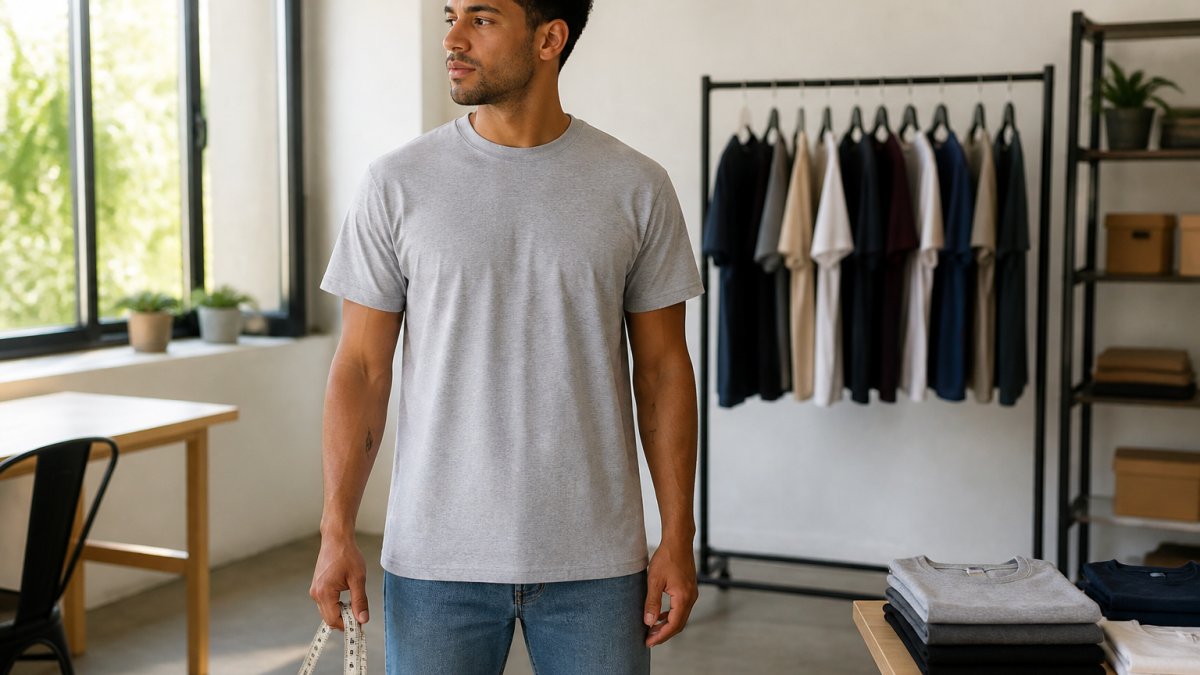
Unisex sizing is the most misunderstood part of buying christian apparel online. A unisex shirt is neither a men's nor a women's shirt; it's a straight-cut fit based on men's measurements.
The practical fix: measure a shirt you already own and like. Lay it flat, measure pit-to-pit and collar-to-hem, then compare those numbers to the brand's size chart.
How to Read a Size Chart Like a Shopper, Not a Guesser
A useful size chart gives you at least two numbers per size: chest width (measured flat, pit to pit) and body length (collar to hem). If a brand only lists S/M/L with no measurements, you're guessing. Here's how to translate:
- Chest width: Double the flat pit-to-pit measurement to get the full circumference. A shirt that measures 20 inches flat is a 40-inch chest.
- Body length: Compare against a shirt you already like. If your favorite tee is 28 inches long and the chart says 27, expect it to sit slightly higher.
- Sleeve length: Rarely listed, but worth asking about if you're tall or have long arms.
Fit Varies by Fabric, Not Just by Label
Fit also depends on fabric weight. A 4.2 oz./yd.² combed cotton shirt drapes closer to the body than a heavier 6 oz. blank. For a relaxed look, size up; for a fitted look, stay true to your measurements. Heavier pre-shrunk fabrics shrink less but hold more structure, which can make a straight-cut unisex shirt read boxier than a lighter one in the same size.
Extended Sizes and Inclusive Fit
Extended sizing is one of the clearest signals of whether a brand wants your business. Ask two questions before you buy:
- Does the extended size use the same fabric and construction as the core sizes, or is it a cheaper blank?
- Is the price the same, or is there a surcharge?
The Fit Issues Nobody Warns You About
A few honest notes worth knowing before you order:
- Lighter colors run sheer. White and pale heather fabrics are slightly see-through under certain lighting. That's true across most mid-weight cotton blanks, not just ours.
- Pre-shrunk isn't shrink-proof. Expect roughly 3-5% residual shrinkage on the first hot wash. Cold water and low heat preserve the fit.
- Straight-cut unisex shirts don't taper. If you're used to women's cuts with a waist, expect a boxier silhouette unless you size down.
- Collar stretch is a fit issue, not just a construction issue. Shoulder-to-shoulder taping helps, but a too-large neck opening will still slip.
If a brand won't publish chest and length measurements, offer extended sizes, or answer a sizing question by email, that's your answer about how much they care about fit.
Scripture-Inspired Designs That Go Deeper Than Surface Level
Scripture-inspired designs fall into three tiers, and only one is worth paying for. Tier one is a verse reference slapped on a blank. Tier two is a well-typeset verse with some design thought. Tier three requires the wearer to have actually engaged with the passage.
Tier three is where faith-filled designs earn their place in your closet. The Pew Research Center's data on religious expression in daily life shows that most Americans who hold religious beliefs rarely discuss them outside their own circles, which makes a wearable conversation starter more useful than it sounds.
Conclusion
Finding christian apparel brands that hold up in the wash, fit correctly, and carry designs worth explaining takes more work than it should.
That's the standard we hold ourselves to at Marble Suspended in Space. Designs like Genesis 2:2, God Sees Solutions, and Gravity of Grace come from the same Isaiah 31:4 study method we use across our books, blog, and podcast.

Start with one shirt. Search our collection and see how it wears before you commit to a drawer full.
Frequently Asked Questions
What should I look for when choosing a Christian apparel brand?
Start with fabric specs, not slogans. Look for pre-shrunk cotton with a stated fabric weight, such as 4.2 oz./yd.², because that tells you how the shirt will hold up after washing. Check whether the brand lists its blank product sourcing, since that affects consistency. Then read the design descriptions: a brand that explains the scripture behind each design is usually more invested than one selling generic crosses. Finally, confirm sizing ranges and return policies before you buy.
Are there Christian t-shirt brands with unisex styles?
Yes, and unisex cuts are common in faith-based apparel because they simplify sizing and fit both men and women. A unisex Christian t-shirt typically uses side-seamed construction and shoulder-to-shoulder taping, which keeps the shape stable through repeated washing. If you prefer a fitted look, size down; for a relaxed fit, order your standard size. Check the brand's size chart rather than assuming, since unisex measurements vary between suppliers.
How do I know a faith-based clothing brand is legitimate?
Look for specifics. A legitimate brand will name its fabric weight, describe its construction methods, and disclose where the blank garments come from. It will also explain the meaning behind its designs instead of relying on vague inspirational language. If a brand makes charitable claims, see whether it names the organization and the amount given. Brands that answer these questions openly are easier to trust than ones that only show product photos.
Do Christian apparel brands offer sizes beyond standard ranges?
Coverage varies widely. Some brands carry extended sizes, while others stop at a standard range. Before ordering, check the size chart for chest measurements in inches rather than relying on S, M, L labels, since those differ between suppliers. If you are buying for someone with specific fit needs, look for brands that publish detailed garment measurements and offer exchanges. That combination matters more than the size label itself.
What makes scripture-inspired designs different from generic Christian shirts?
Depth of reference. Generic designs lean on broad symbols or phrases, while scripture-inspired work ties a specific passage to the artwork. For example, a design built around Genesis 2:2 or Mark 2:27-28 invites a conversation about that text rather than just announcing a category. That specificity is what turns a shirt into a conversation starter, because the wearer can explain the verse behind it when someone asks.